A field of poppies — the emblem of remembrance

  A new musical

Decorum

Craiglockhart, 1917.

Sassoon meets Owen. The war keeps writing.

By Tamiko Dooley & Cathy Farmer

Epigraph

Everyone knows the poetry.
No-one knows the cost.

Two poets. One witness.
A friendship that
became a literature.

August 1917. Captain Siegfried Sassoon, decorated and disgraced, is sent to Craiglockhart for declaring the war a deceit. There he meets a quiet young lieutenant who has been writing in secret.

Decorum is the story of the four months that followed — tender, funny, electric and unbearable — and of the witness who watched two men rewrite English poetry between breakfast and the evening bell.

A chamber musical in two acts.

3
Characters
1917
Edinburgh
II
Acts

In real life

The men who actually
met in that room.

Everything in Decorum begins here — with two real soldiers, a knock at the door, a stack of poems, and four months in a hospital outside Edinburgh.

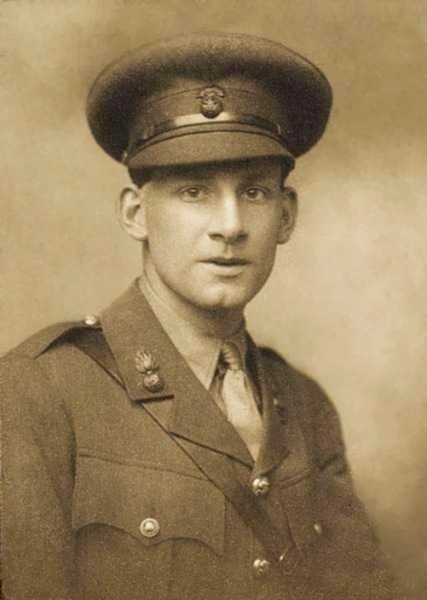
Siegfried Sassoon, photographed by George Charles Beresford, 1915
Plate 01

Siegfried Sassoon, photographed by George Charles Beresford, 1915

The Mentor

Siegfried Sassoon

1886 — 1967Captain · Royal Welch Fusiliers · Military Cross
“I am making this statement as an act of wilful defiance of military authority.”
A Soldier's Declaration, July 1917

Born into the fabulously wealthy Sassoon banking dynasty — the Rothschilds of the East — he was a fox-hunting cricketer who became one of the most decorated officers of his battalion. His men called him Mad Jack: he once took a German trench single-handed and sat down to read a book of poems.

In July 1917 he threw his Military Cross ribbon into the River Mersey and posted his Soldier's Declaration to his commanding officer — a public refusal to fight. His friend Robert Graves scrambled to save him from court-martial by having him diagnosed with shell-shock. He was sent to Craiglockhart instead. He was thirty-one.

He survived the war, lived to eighty, and never quite forgave himself for surviving. He converted to Catholicism in 1957. He kept Owen's letters in a drawer for fifty years.

31
His age at Craiglockhart
MC
Military Cross, 1916
1957
Received into the Catholic Church
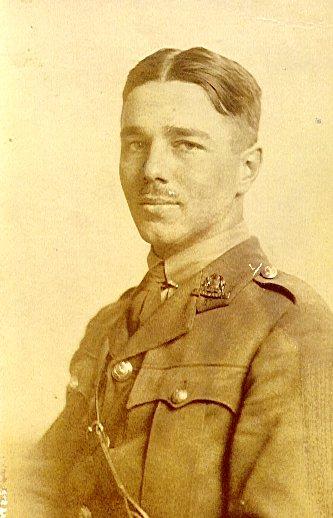
Wilfred Owen in uniform, c. 1916 — the only verified portrait
Plate 02

Wilfred Owen in uniform, c. 1916 — the only verified portrait

The Apprentice

Wilfred Owen

1893 — 1918Lieutenant · Manchester Regiment · Military Cross
“My subject is War, and the pity of War. The Poetry is in the pity.”
Draft preface, 1918

A railway-clerk's son from Shropshire. Devout, then disillusioned. He spent two years as a vicar's lay-assistant before teaching English in Bordeaux, where he discovered Verlaine and wrote earnest, derivative verse he later burned.

In 1917 he was blown into the air by a shell, found unconscious on an embankment beside the remains of a fellow officer, and diagnosed with neurasthenia. At Craiglockhart he edited the hospital magazine, The Hydra, and — clutching five copies of The Old Huntsman — knocked on the door of the famous Captain Sassoon to ask for an autograph. He left having met the man who would teach him to write the poems we now know by heart.

He returned to the front. He won the Military Cross for outstanding bravery in October 1918. He was killed crossing the Sambre–Oise canal on 4 November 1918 — one week before the Armistice. The telegram reached his mother as the village church bells were ringing for peace. He was twenty-five.

25
His age at death
5
Poems published in his lifetime
7 days
Between his death and the Armistice

Owen brought five copies of Sassoon's The Old Huntsman to be signed. He left with a mentor. Four months later he was writing Dulce et Decorum Est.

Dramatis Personae

The Company

A cast of three. A piano. A war.

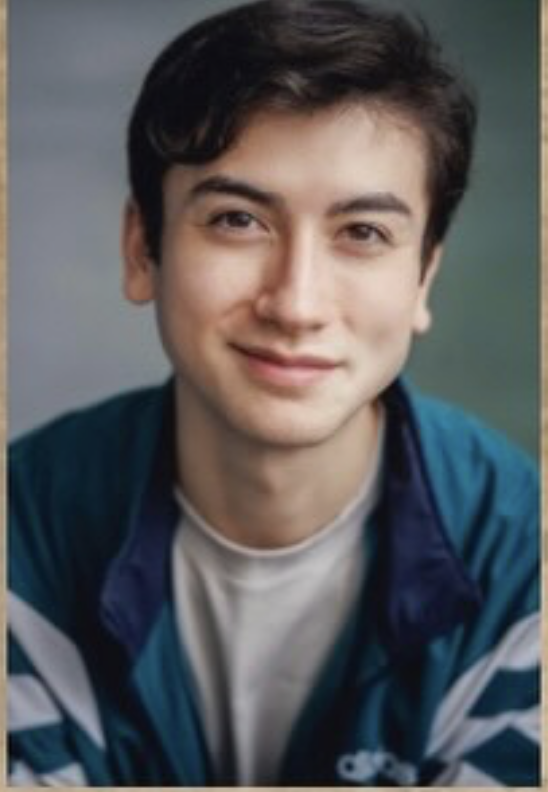
Charlie Renwick as Siegfried Sassoon
No. 01

as

Siegfried Sassoon

Charlie Renwick

Decorated officer. Pacifist. Mentor.

Josh Liew as Wilfred Owen
No. 02

as

Wilfred Owen

Josh Liew

Young lieutenant. Apprentice. Genius.

Maddie Gray as The Witness
No. 03

as

The Witness

Maddie Gray

Memory. Conscience. The room itself.

The Writers

Built by two women
over many late nights.

01 · Music & Lyrics

Tamiko Dooley

A composer and pianist who left a career in the City to do the one thing she could not stop thinking about. Her music sits where classical discipline meets theatrical instinct — every melody earned, every harmony interrogated. She appeared on Channel 4's The Piano (Series 3). She still practises six hours a day.

02 · Book & Lyrics

Cathy Farmer

A writer who spent fifteen years in messaging and strategy before turning to the stories that history had filed under 'miscellaneous'. She is drawn to the people between the footnotes — the ones who changed everything and were forgotten anyway. This is her first musical. She suspects it will not be her last.

Direction

Shaped in the room by
a third pair of hands.

Craig McKenzie, Director

03 · Director

Craig McKenzie

Craig runs Mint Face Productions, the London-based company he co-founded in 2019 with a BBC commission, awards in film, and theatre work staged in Camden and Southwark to its name. He also runs Future Filmmakers camps for young creatives. He's directing Decorum.

From the Trenches of the Reading Room

"A musical of extraordinary tenderness — funny, brutal, and altogether necessary."

— Audience response, Scribbles Sessions

"It made me laugh. Then it broke me. Then it sent me home reading Owen again at 1am."

Workshop audience, June 2025

"Honours the men without sanctifying them. You feel they are in the room."

Industry preview

Now Playing

Scribbles Sessions

The Other Palace · London

A full production is in development. Join the list below to know before the rest of the world does.

Field dispatches

Occasional letters from the writers' room. New songs, casting news, show dates. No noise.